

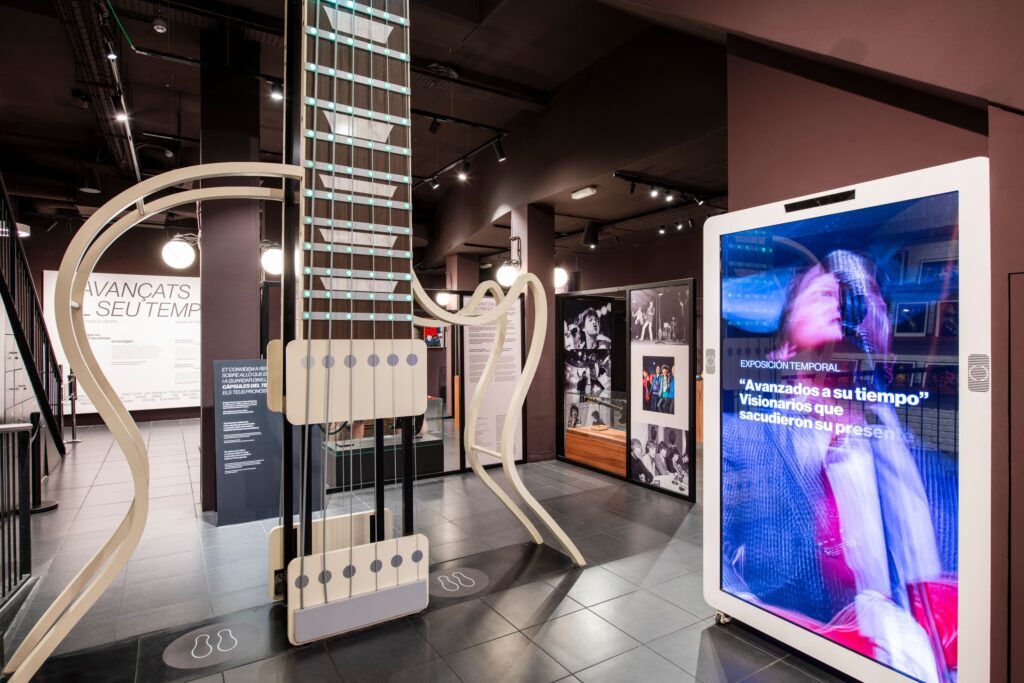
Barcelona has concert venues, festivals, record shops and a musical history that crosses languages, neighbourhoods and generations. But a musical city also needs spaces that preserve, organize and explain that memory.
It Is Not Just About Nostalgia
Nostalgia looks back and selects the memories that suit it. A museum has to do something else: place objects in context, explain connections and accept contradictions. Rock was not only freedom and attitude. It was also shaped by inequality, industrial interests, identity conflicts and technological change.
That is why a guitar is not interesting only because a star played it. It is interesting because it can explain how music was made and distributed, who had access to stages and why certain sounds connected with millions of people.
A Global Story with a Local Entrance
The Museu del Rock Barcelona follows the genre’s history from the African American roots of the blues to the generations of the 2000s. The timeline passes through the British Invasion, counterculture, vinyl, the MTV era, grunge and stadium rock.
This global story makes sense in Barcelona because the city has not experienced music from the outside. It has had its own scenes, circuits, shops, venues and audiences that translated rock’s major changes into their own cultural reality.
Memory Also Needs a Future
A museum’s mission is not to freeze music behind glass. It is to give people the tools to understand why it mattered and how it continues to change. Temporary exhibitions, audiovisual resources and the final mini-concert help keep that conversation open.
Barcelona needs a Museu del Rock because its musical culture deserves more than a playlist of memories. It deserves a place where instruments, people and contexts can tell a shared story.